Imagine reading an ancient document that describes the rise of a powerful empire, the sudden death of its greatest ruler, and the division of his kingdom among four successors. Then imagine discovering that these events occurred exactly as the document describes. Would you consider that coincidence, an educated prediction, or evidence of something supernatural?
The Bible makes an extraordinary claim: God knows the future before it happens. In Isaiah 46:9–10, God declares that He is unlike any other, revealing the end from the beginning and announcing things not yet accomplished.
Unlike vague predictions that could apply to almost anything, several biblical prophecies involve identifiable kingdoms, military campaigns, and historical circumstances. Their significance can be examined against historical records.
The central question is not merely whether a biblical passage resembles an event from history. It is whether the prediction genuinely preceded the event and whether its details are specific enough to make the correspondence meaningful.
Three particularly remarkable cases deserve examination.
1. Daniel's Vision: The Rise and Fall of Alexander the Great
In Daniel 8, the prophet describes a vision involving two animals. First, a ram with two horns dominates the surrounding region. Then a male goat approaches rapidly from the west, carrying a prominent horn. The goat attacks and defeats the ram, becomes exceedingly powerful, and suddenly loses its great horn. Four new horns arise in its place.
What makes this prophecy extraordinary is that the chapter identifies the kingdoms represented by the animals.
Daniel 8:20–22 explains that the ram represents Media and Persia, while the goat represents Greece. Its great horn symbolizes the first king, whose kingdom is subsequently divided into four kingdoms.
Now consider the historical record.
The historical sequence
334 BC: Alexander the Great begins his invasion of the Persian Empire.
333–331 BC: His victories at Issus and Gaugamela establish Greek supremacy over Persia.
323 BC: Alexander dies in Babylon at approximately 32 years old, without leaving a settled succession.
Following decades: His empire fragments through wars among his successors, eventually producing four major Hellenistic kingdoms commonly associated with Macedonia, Egypt, Asia Minor, and the Seleucid realm.
The correspondence is striking. The vision describes Greece defeating Persia, a dominant ruler rising to power, that ruler's sudden removal, and the division of his kingdom.
The historical interpretation of Daniel 8 closely matches the career and aftermath of Alexander the Great.
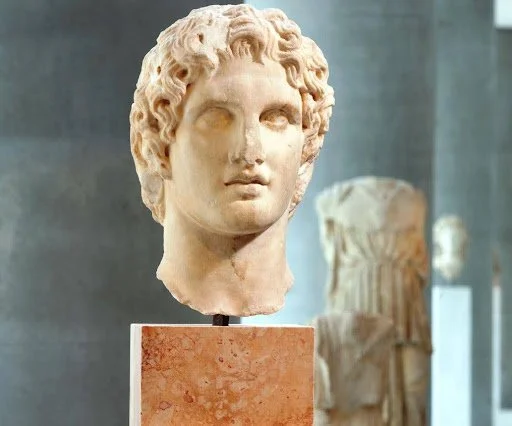
Alexander the Great conquered the Persian Empire and died in 323 BC. His successors eventually divided his empire.
The objection: Was Daniel written after these events?
This is the most important challenge to the prophecy. Traditionally, Daniel is dated to the sixth century BC, during the Babylonian exile. Many modern scholars instead date the book's final composition to the second century BC, particularly the period of Antiochus IV Epiphanes.
That later dating is not simply a refusal to believe in prophecy. Scholars also point to literary, linguistic, and historical arguments, especially the relationship between Daniel 11 and events of the second century BC.
Nevertheless, there are reasons Christians defend an earlier origin. Daniel presents its visions within the sixth-century setting, and its Aramaic and Hebrew material has been extensively studied in arguments about its composition. Moreover, the prophecy's explicit naming of Greece and Persia is significant: the text is not merely a prediction retroactively assigned to anonymous kingdoms.
A fair response must acknowledge that Alexander's conquests occurred before the second-century date proposed by many scholars. Thus, their historical accuracy alone cannot settle the dating debate. The strength of the traditional Christian argument depends on the broader evidence for Daniel's early composition, not simply on declaring that skeptics reject miracles.
For those who accept its traditional dating, Daniel 8 represents an extraordinary prediction of events unfolding more than two centuries later.
2. The Destruction of Tyre: A City Whose Stones Entered the Sea
The ancient Phoenician city of Tyre was an important Mediterranean trading center, renowned for its wealth, fortified defenses, and maritime power.
Ezekiel 26 contains a prophecy of judgment against this city. The chapter identifies Nebuchadnezzar of Babylon as an attacking king, describes multiple nations coming against Tyre, and declares that its walls and towers would be broken down.
One particularly unusual detail appears in Ezekiel 26:12: the city's stones, timber, and soil would be thrown into the water.
Why would the destruction of a city require its building materials to be thrown into the sea?
History provides a remarkable parallel.
In the sixth century BC, Nebuchadnezzar conducted a prolonged campaign against Tyre. The city's fortified island position helped make it an exceptionally difficult target. In 332 BC, Alexander the Great encountered the same obstacle.
Unable to reach the island fortress directly with his land forces, Alexander ordered the construction of a causeway from the mainland to the island. His army used material from the mainland settlement, including stones and debris, to create the structure.
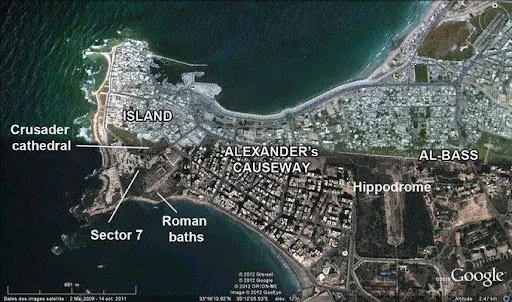
Modern Tyre, Lebanon. Alexander's causeway helped transform the former island city into part of a peninsula.
After a siege lasting approximately seven months, Alexander captured Tyre. The causeway he constructed permanently altered the geography of the area, a development supported by geological research.
The parallel between Ezekiel's description of material cast into the sea and Alexander's engineering operation is difficult to overlook.
The objection: Tyre still exists today
Critics point to Ezekiel 26:14, which states that Tyre would not be rebuilt. Since a modern city named Tyre exists today, they argue the prophecy failed.
This objection deserves more than a dismissal. The ancient mainland settlement, the fortified island city, and the modern urban area are not identical in extent or historical form. Defenders of the prophecy emphasize the destruction of ancient Tyre's political and military power and the specific dismantling of its mainland structures.
Ezekiel 26:3 also describes many nations coming against Tyre, an important detail when considering its successive sieges. Yet the precise scope of the promise that Tyre would never be rebuilt remains debated. The existence of modern Tyre cannot simply be ignored.
What can be established historically is remarkable enough: Tyre suffered successive military campaigns, and Alexander's conquest involved the movement of debris into the sea, corresponding closely with an unusual feature of Ezekiel's description. The stronger claim that every element of the prophecy has been exhaustively fulfilled requires additional interpretation.
3. Isaiah 53: The Suffering Servant and the Coming Messiah
Of all the prophecies Christians associate with Jesus Christ, Isaiah 53 may be the most remarkable.
Written in a book traditionally associated with the eighth-century BC prophet Isaiah, the passage describes a servant who is rejected, suffers on behalf of others, remains silent before his oppressors, dies, and is subsequently vindicated.
Consider the connections Christians identify between Isaiah 52:13–53:12 and the Gospel accounts.
Isaiah's description
New Testament connection
Rejected and despised — Isaiah 53:3 John 1:11; John 19:14–16
Bears the sins of others — Isaiah 53:4–6 1 Peter 2:24
Silent before his accusers — Isaiah 53:7 Matthew 27:12–14
Associated with a rich man in death — Isaiah 53:9 Matthew 27:57–60
Dies yet afterward sees life and vindication — Isaiah 53:10–12 Luke 24:46; Acts 8:32–35
The similarities form the basis of a powerful Christian argument. The servant's suffering is portrayed not as meaningless tragedy but as having a redemptive purpose.
But how do we know this passage existed before Jesus?
The manuscript evidence
In 1947, the discovery of the Dead Sea Scrolls provided an extraordinary historical witness. Among them was the Great Isaiah Scroll, commonly dated to around 125 BC.
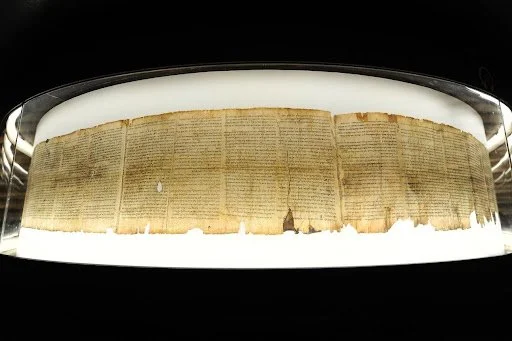
The Great Isaiah Scroll contains Isaiah 53 and predates the life of Jesus by more than a century.
This manuscript preserves the Book of Isaiah, including the passage Christians understand as describing Jesus' suffering and death. Its existence establishes that the text was circulating long before the crucifixion.
That is critically important. Whatever one concludes about fulfillment, Isaiah 53 was not invented by Christians after Jesus died.
The objection: Is the suffering servant really Jesus?
Many Jewish interpreters understand the servant in Isaiah 53 collectively, often identifying him with Israel, while Christian interpreters identify the servant with the Messiah.
The Christian argument emphasizes the servant's apparent innocence, his suffering on behalf of others, his death, and his subsequent vindication. Isaiah 53:8–9 and 53:11–12 are especially important because they distinguish the servant from those whose sins he bears.
The objection cannot simply be dismissed as impossible, because Isaiah elsewhere explicitly calls Israel God's servant (Isaiah 41:8–9). Yet Christians argue that the individual language and redemptive role described in Isaiah 53 point beyond the nation to a particular person.
The strongest evidence is cumulative: an ancient text demonstrably predating Christianity describes a suffering, rejected, and vindicated servant in ways Christians find remarkably consistent with Jesus' crucifixion and resurrection.
The manuscript establishes the passage's antiquity. Its fulfillment in Jesus is a theological and historical argument built from the passage and the New Testament testimony.
The Verdict: Can History Be Predicted?
Three different prophecies present three different kinds of evidence. Daniel describes the succession of ancient kingdoms. Ezekiel records judgment against a powerful maritime city, including an unusual detail that parallels its later conquest. Isaiah describes a suffering servant centuries before the life of Jesus.
These passages cannot all be answered with the same objection. Daniel raises questions about the dating of its composition. Tyre raises questions about the extent and timing of fulfillment. Isaiah raises questions about the identity of the servant. Each deserves examination on its own terms.
Yet there is a compelling cumulative argument here. The Bible contains remarkably specific passages that correspond to identifiable historical events, and manuscripts establish that at least some of its most important messianic texts existed long before Christianity.
Historical evidence does not resolve every dispute over dating or interpretation. But neither do those disputes erase the correspondences themselves.
For Christians, fulfilled prophecy is not an attempt to discover hidden meanings in ordinary events. It is a reason to take seriously God's declaration that He knows history before it unfolds.
The Bible presents God not as someone responding to an uncertain future, but as the One who knows the end from the beginning.
And the closer we examine these remarkable passages, the stronger the case becomes that biblical prophecy deserves far more than a casual dismissal.
Additional Prophecies Worth Investigating
The examples examined above are only a small portion of the Bible's prophetic record. For readers interested in investigating further, the following passages can be compared with historical accounts, archaeological discoveries, and documented events.
1. Cyrus Named Before His Reign
Scripture: Isaiah 44:28–45:4; 2 Chronicles 36:22–23; Ezra 1:1–4.
Historical sources: The Cyrus Cylinder, the Nabonidus Chronicle, and Josephus's Antiquities of the Jews, Book 11, Chapter 1.
What to investigate: Isaiah names Cyrus and describes his role in Jerusalem's restoration. The historical records establish Cyrus's conquest and restoration policies, while Josephus recounts Cyrus reading Isaiah's prophecy.
2. The Destruction of Jerusalem and the Temple
Scripture: Matthew 24:1–2; Luke 19:41–44; Luke 21:20–24.
Historical sources: Josephus's The Jewish War, Books 5–6; Tacitus's Histories, Book 5.
What to investigate: Jesus foretold Jerusalem's destruction. In AD 70, Roman forces under Titus captured Jerusalem and destroyed the Second Temple.
3. Israel's Dispersion and Regathering
Scripture: Deuteronomy 28:64–67; Ezekiel 36:24; Ezekiel 37:1–14, 21–28; Isaiah 11:11–12; Jeremiah 31:35–37.
Historical sources: Josephus's The Jewish War; historical records of the Jewish diaspora; the 1948 Israeli Declaration of Independence.
What to investigate: The Jewish people's dispersion, their continued national identity, and the modern return to their ancestral homeland. Ezekiel's vision is often understood as having both national and spiritual dimensions.
4. Babylon's Fall to Persia
Scripture: Isaiah 13:17–22; Isaiah 21:1–10; Jeremiah 51:11, 28–32; Daniel 5.
Historical sources: The Nabonidus Chronicle, the Cyrus Cylinder, and Herodotus's Histories, Book 1.
What to investigate: Babylon's conquest by Persian forces in 539 BC. The Nabonidus Chronicle records that the city was entered without a battle, following earlier fighting elsewhere.
5. The Destruction of Nineveh
Scripture: Nahum 1:8–10; Nahum 2:1–13; Nahum 3:1–19; Zephaniah 2:13–15.
Historical sources: The Babylonian Chronicle describing the fall of Nineveh in 612 BC, and archaeological excavations of Nineveh.
What to investigate: The destruction of the Assyrian capital by the Babylonians and Medes, bringing an end to Nineveh's position as an imperial center.
6. Israel's Preservation Through History
Scripture: Leviticus 26:44–45; Jeremiah 30:11; Jeremiah 31:35–37; Malachi 3:6.
Historical sources: Assyrian and Babylonian royal inscriptions, Josephus's historical writings, and documented Jewish history through successive empires.
What to investigate: The continued existence of the Jewish people and their religious and cultural identity despite conquest, exile, dispersion, and persecution.
These passages invite readers to examine Scripture alongside the historical record and consider the relationship between biblical prophecy and the events that followed.