The Book That Refused to Die: The Holy Bible

Why the Holy Bible?
Let’s talk about it.
Want to bring something truly fascinating to your next Bible study? I’ve come across some powerful truths that I believe will strengthen your faith and give you solid answers when people ask why you trust the Bible.
Have you ever wondered why we follow the Bible instead of one of the many other religious texts in the world? Why exactly 66 books — no more, no less? And why these specific writings, written across centuries by different people, carry such authority? These are important questions, especially in a world where many claim to have spiritual truth. While it’s true that Christians haven’t always represented the faith well, that doesn’t change the fact that each of us is responsible for knowing why we believe what we believe. For some, blind faith isn’t enough — we need reasons rooted in truth.
If you’ve ever asked yourself, “Why the Bible?” I’d love to walk you through some compelling evidence and historical facts that make the Bible stand out from every other book ever written.
Did you know that the Bible is not a single book, but rather a collection of 66 books written over a span of approximately 1,500 years? These writings were composed between roughly 1400 B.C. and A.D. 100, by about 40 different authors from various backgrounds and walks of life. The term B.C. stands for “Before Christ,” referring to the years preceding the birth of Jesus, while A.D. is an abbreviation of the Latin phrase Anno Domini, meaning “in the year of our Lord,” and refers to the years following His birth. Remarkably, these 66 books were written in three different languages (Hebrew, Aramaic, and Greek) across three different continents (Asia, Africa, and Europe), yet they present a single, consistent message centered on God’s plan of redemption through Jesus Christ.
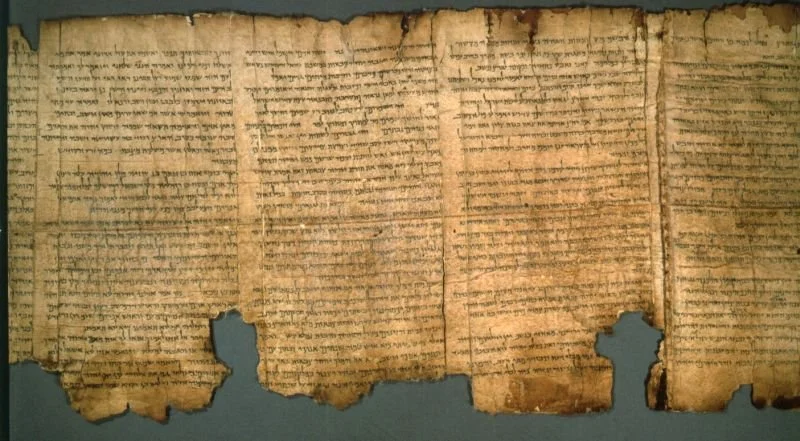
The Bible also includes ancient manuscripts known as the Dead Sea Scrolls, which contain some of the oldest known copies of the Old Testament. These scrolls include well-known stories such as Moses leading the Israelites out of Egypt and into the Promised Land, Noah and the great flood, Samson’s victories, and the prophecies of Elijah.

This is where the scrolls were discovered.
The collection of writings we now call the Old Testament, or the Hebrew Tanakh, was already in use during the time of Jesus. When the apostle Paul refers to “Scripture” in the New Testament, he is speaking of these Old Testament writings, as the New Testament had not yet been written.
For many years, some scholars believed that the text of the Old Testament had been altered or corrupted over time. However, this view was challenged in the mid-20th century with the discovery of the Dead Sea Scrolls. Found in caves near Qumran by the Dead Sea, these ancient manuscripts contained both biblical and non-biblical texts.
Remarkably, when compared with the Old Testament we use today, the content was found to be highly consistent. The book of Esther, however, was not in the scrolls. While most of the scrolls were discovered in fragments and had to be carefully reconstructed, the Great Isaiah Scroll was found almost entirely intact, providing powerful evidence for the accurate preservation of the biblical text over many centuries.
The New Testament, which centers on the life, teachings, death, and resurrection of Jesus Christ, is one of the most well-documented texts in ancient history. For comparison, Julius Caesar has only about 10 surviving manuscripts, with some written nearly 900 years after his lifetime. Similarly, Alexander the Great has only 7 to 10 manuscripts, most of which were written 300 to 500 years after the events they describe. Despite these significant gaps and limited sources, both figures are widely accepted as historical without much debate.
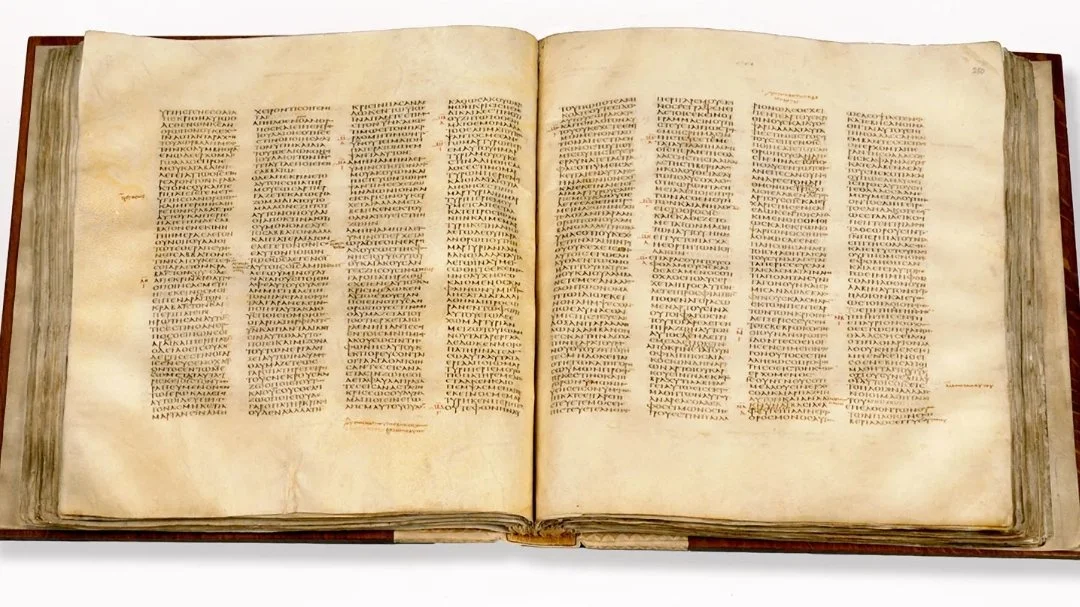
One of the most important early manuscripts is Codex Sinaiticus, which the Britannica Editors describe as “the earliest known manuscript of the Christian Bible, compiled in the 4th century CE.” While it contains many corrections by later scribes, these were mostly minor spelling or grammatical changes. The manuscript was not rewritten, but carefully reviewed to preserve the accuracy of the text.
The Hebrew Old Testament was also preserved through the work of Jewish scholars known as the Masoretes, who standardized the text between the 7th and 10th centuries. Two of their most significant manuscripts are the Aleppo Codex (c. 930 AD) and the Leningrad Codex (1008 AD), which form the basis of the Masoretic Text used today. These codices contain the Tanakh, also known as the Jewish Bible. While many scholars often consult the Septuagint—the ancient Greek translation found in early codices like Sinaiticus, Vaticanus, and Alexandrinus—for certain passages, the Masoretic tradition remains the primary Hebrew text for most modern Bibles.
In contrast, there are over 5,800 Greek manuscripts of the New Testament. These documents, which record what Jesus did and who He claimed to be, were written between 25 and 60 years after the events took place. This remarkably short time gap, combined with the sheer volume of manuscripts, provides an extraordinary level of historical evidence — far greater than what exists for many other well-known figures taught about in history classes today.
Now let’s look at something truly remarkable. The Bible stands alone as the most attacked, banned, and persecuted book in human history. It has been burned, outlawed, and suppressed more than any other book ever written. Yet despite centuries of opposition, it remains the best-selling and most translated book in the world.
The life, death, and resurrection of Jesus Christ are also the most studied subject in all of history. Countless scholars, historians, and skeptics have examined the evidence surrounding His life, and remarkably, it has never been disproven. In fact, many who have set out to disprove the claims of Christianity have ended up becoming believers themselves after carefully studying the historical facts.
The Bible has been attacked for as long as it's been here. Throughout history, both Jewish and Christian sacred writings faced deliberate attempts at destruction. One of the earliest recorded efforts occurred in 167 B.C., when the Greek ruler Antiochus Epiphanes launched a campaign against the Jewish people. According to the Jewish historian Flavius Josephus, Antiochus ordered the burning of Jewish Scriptures and made it illegal to possess or read them, as part of his attempt to suppress Jewish religion and culture.
Centuries later, early Christian writings faced similar opposition under the Roman Empire. In A.D. 64, following the Great Fire of Rome, Emperor Nero initiated a brutal persecution against Christians, as recorded by the Roman historian Tacitus. During this period, many Christians were arrested and executed, and Christian writings were likely destroyed as part of the crackdown. Additional waves of persecution occurred under Emperor Domitian between A.D. 81 and 96, further threatening the survival of early Christian documents.
The most systematic and severe attack on Christian Scriptures took place in A.D. 303 under Emperor Diocletian. He issued an official edict ordering the destruction of all Christian churches and the burning of Christian writings. Those found in possession of sacred texts could face arrest or execution. This event is documented by early historians such as Eusebius and Lactantius. Despite these repeated and organized efforts to eliminate the Scriptures, both the Old and New Testament writings continued to be copied, preserved, and circulated.
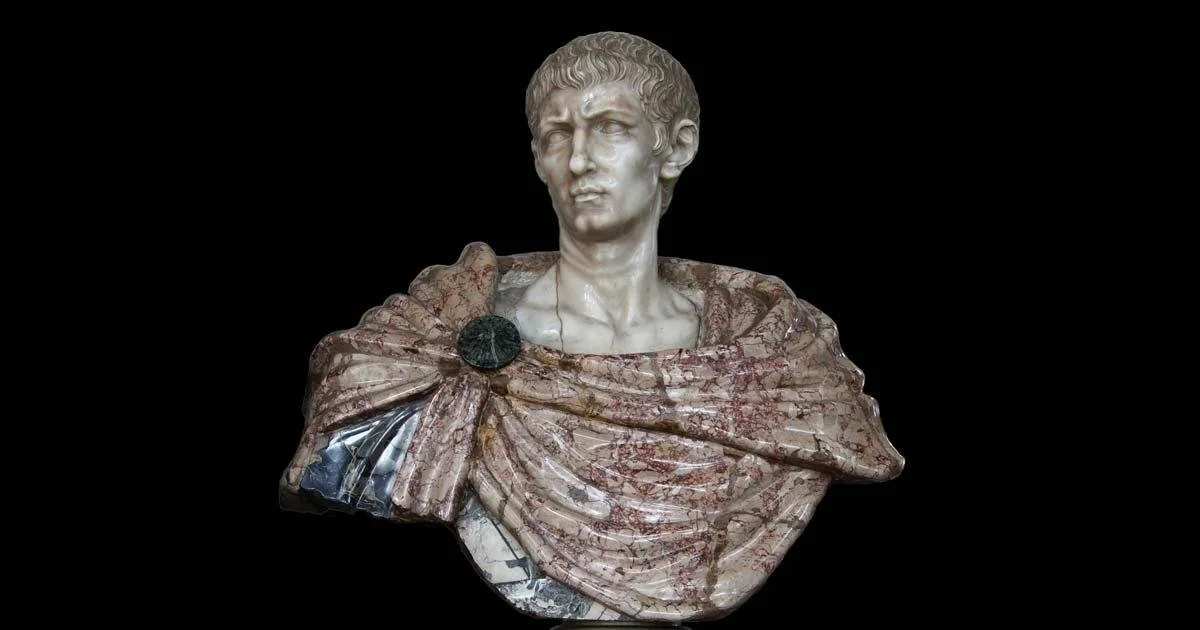
This is the face of one of the most severe attempts to destroy scripture.
One of the most compelling pieces of evidence for the divine nature of Scripture is the presence of fulfilled prophecy. The Bible contains hundreds of specific predictions that were written hundreds of years before they came to pass. Many of these prophecies, especially those concerning the Messiah, were fulfilled in remarkable detail. For example, the Old Testament foretold that the Messiah would be born in Bethlehem (Micah 5:2), betrayed for thirty pieces of silver (Zechariah 11:12), pierced and crucified (Psalm 22 and Isaiah 53), and rise from the dead (Psalm 16:10). The mathematical probability of so many precise prophecies being fulfilled by chance is considered astronomically low, pointing to a supernatural source behind the Scriptures.
Another powerful testimony to the Bible’s divine origin is its transformative power. Throughout history, the Bible has dramatically changed individual lives, often rescuing people from destructive patterns and giving them purpose and hope. Beyond personal transformation, Scripture has also influenced entire societies, playing a significant role in the abolition of slavery, the advancement of human rights, the development of education, and the growth of charitable work around the world. Its impact has reached far beyond religious circles, shaping laws, ethics, and culture across nations.
Perhaps most striking is the number of skeptics and critics who have set out to disprove the Bible, only to become believers after carefully examining the evidence. Well-known examples include Lee Strobel, C.S. Lewis, and Josh McDowell, each of whom began as an opponent of Christianity but ultimately concluded that the Scriptures are trustworthy and true. These transformations serve as a powerful witness to the Bible’s ability not only to withstand scrutiny but also to change even the hardest of hearts. My personal belief is that anyone seeking truth will find themselves at the feet of Jesus.
The Holy Bible possesses qualities that set it apart from all other religious texts. Unlike many sacred writings, it contains a rich blend of history, science, moral teaching, and prophecy, all woven together into one unified message. What makes it even more remarkable is the sense of life it carries — as though something alive exists within its pages, speaking to the human heart across generations and cultures. You could even find a study that suggests reading Scripture, the Holy Bible, four or more times a week will decrease addiction, depression, or even anger.
Despite centuries of attempts to destroy, suppress, degrade, and remove it, the Scriptures have endured. Empires have risen and fallen, and countless efforts have been made to erase its influence, yet the Bible remains the most translated, most published, and most read book in human history. This remarkable preservation points to something greater than human effort at work — a divine protection that has kept it alive through the ages.