The Book that Refused to Die: The Holy Bible (Part 2)
In Part 1 of this series, we began exploring the remarkable story of the Bible’s survival. We looked at the discovery of the Dead Sea Scrolls in the caves near Qumran, including the scroll of Isaiah, which dates back over 2,000 years and remains remarkably consistent with the text we read today. We also examined Codex Sinaiticus and saw how Scripture has endured centuries of persecution, attempts at destruction, and suppression — yet it stands today as the most translated and widely distributed book in human history.
Truly, the Bible has a powerful story to tell long before we even open its pages. Today, I want to go deeper. We’re going to address one of the most common questions people ask when discussing the reliability of the Bible: “Hasn’t the Bible been translated and copied so many times that it’s like a game of telephone? How can we be sure it hasn’t changed?”
The answer is clear: it has not changed in any meaningful way. The major ancient manuscripts we possess demonstrate that the core message, wording, and meaning of Scripture have been faithfully preserved across the centuries.
One of the most significant of these manuscripts is Codex Sinaiticus. Discovered in the mid-19th century at St. Catherine’s Monastery in the Sinai Peninsula, this 4th-century manuscript is one of the oldest and most complete copies of the Bible in existence. Written in Greek on vellum, it contains nearly the entire Old and New Testaments. Its discovery provided scholars with an invaluable window into the text as it existed in the early centuries of the church.
Another critical manuscript is Codex Vaticanus, also from the 4th century and housed in the Vatican Library. Like Sinaiticus, it is written in Greek uncial script and represents one of the earliest and most reliable witnesses to the biblical text. Together, these two codices offer powerful evidence that the Scriptures we have today accurately reflect what was written nearly two thousand years ago.
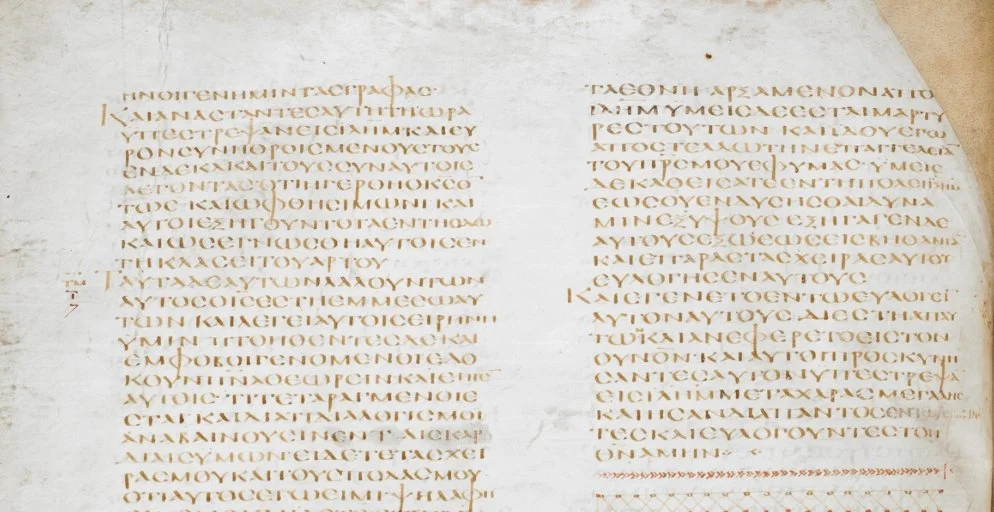
A third important manuscript is Codex Alexandrinus, dating to the 5th century. It contains most of the Old and New Testaments and has long served as a key resource for textual scholars. When we compare these ancient codices with one another and with later copies, we find remarkable consistency. The differences that exist are typically minor—spelling variations, word order, or small omissions—and do not affect core doctrines or the overall message of Scripture.
This brings us to an important point. Some groups have claimed that the Bible became corrupted over time and required restoration or correction. For example, the Joseph Smith Translation (also known as the Inspired Version) makes several changes to the biblical text. One well-known example is John 1:1. The standard reading, preserved in ancient manuscripts such as Codex Sinaiticus, Codex Vaticanus, and Codex Alexandrinus, states:
“In the beginning was the Word, and the Word was with God, and the Word was God.” (John 1:1)
In contrast, the Joseph Smith Translation renders it this way:
“In the beginning was the gospel preached through the Son. And the gospel was the word, and the word was with the Son, and the Son was with God, and the Son was of God.”
These changes significantly alter the meaning of the verse. Joseph Smith believed that the Bible had been corrupted by man and needed correction. However, the discovery and study of these ancient codices—particularly Codex Sinaiticus, which became widely known shortly after he died in 1844—demonstrate that the biblical text has remained stable. The Dead Sea Scrolls, discovered in the 20th century and dating to before the time of Christ, further confirm the remarkable preservation of the Old Testament.
This is not about attacking any particular group. It is about recognizing the overwhelming manuscript evidence that the Bible has not been fundamentally altered. The very fact that the text has remained consistent over thousands of years, despite persecution, hand copying, and translation into hundreds of languages, is extraordinary.
Inside the pages of this book, we read that God Himself does not change (Malachi 3:6; Hebrews 13:8). If His Word had been corrupted or required constant correction to keep up with the times, it would contradict the very nature of the God it reveals.
The evidence from history, archaeology, and textual criticism points instead to faithful preservation.
Historically speaking, the Bible is remarkably accurate both geographically and historically. The places it describes in the Middle East are not fictional — they are real locations that can still be identified today. The landscape, cities, rivers, and coastlines mentioned throughout Scripture match what archaeologists and historians have confirmed.
For example, the Bible repeatedly speaks of Israel, which exists today as the modern State of Israel. It also refers to Ephesus in what is now modern-day Turkey (near the town of Selçuk), whose ancient harbor and connection to the Cayster River align with both biblical descriptions and archaeological findings. Other well-known biblical locations such as Tyre in Lebanon, Nineveh near Mosul in Iraq, and Babylon near Hillah in Iraq were once major centers of power and can still be visited or studied today.
We can also verify many of the specific historical events and figures recorded in the Bible. One of the most striking examples involves Alexander the Great. In 332 B.C., Alexander besieged the island fortress of Tyre. To reach the city, he built a massive causeway using the rubble and ruins of the old mainland city — exactly as the prophet Ezekiel had predicted centuries earlier (Ezekiel 26).
Another powerful confirmation comes from Hezekiah’s Tunnel in Jerusalem. The Bible records that King Hezekiah built a tunnel to bring water into the city during a siege (2 Kings 20:20). In 1880, archaeologists discovered an ancient inscription inside the tunnel describing its construction — matching the biblical account in remarkable detail. The tunnel itself can still be walked through today.
We also have extra-biblical evidence for biblical people and events.
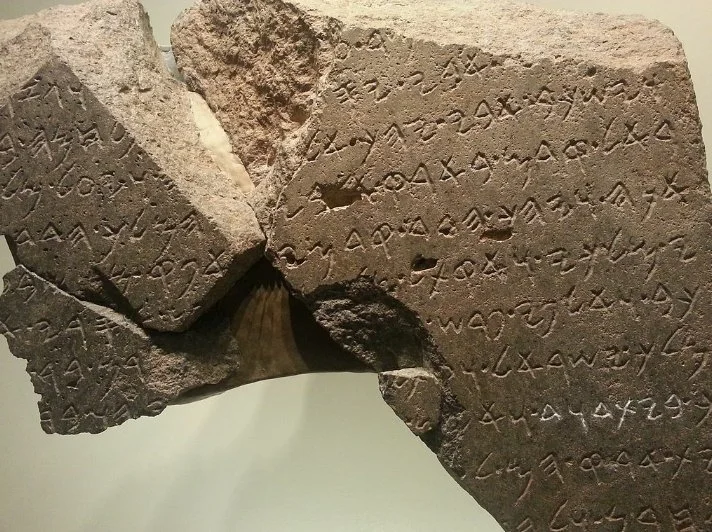
The Tel Dan Inscription, discovered in northern Israel, contains the earliest known reference outside the Bible to the “House of David,” confirming that King David was a real historical figure.
Similarly, the Merneptah Stele, dating to around 1200 B.C., contains the oldest known mention of “Israel” as a people in the land of Canaan.
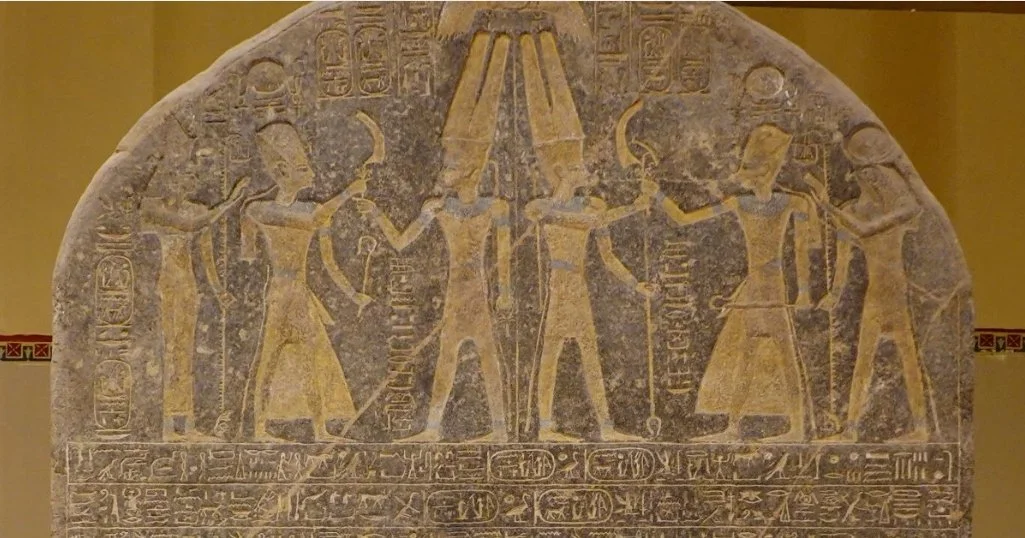
These are just a few examples of how the Bible consistently aligns with historical and archaeological discoveries. This is why we can confidently say that the Bible is not merely a religious book — it is also a book of history. It speaks of real people, real places, and real events that took place in the ancient world.
Jesus’ death on the cross carries just as much historical evidence as the rest of the Bible. Some might wonder, “Even if the Bible has strong historical support, does that actually prove Jesus was real, or that what He did on the cross really happened?” The answer is yes. The crucifixion of Jesus is one of the most well-documented events in ancient history. It is also one of the most studied deaths in all of human history. Both Christian and non-Christian sources from the first and second centuries confirm that Jesus of Nazareth was a real person who was executed by crucifixion under the Roman governor Pontius Pilate.
What makes Jesus’ crucifixion especially significant is how it aligns with Old Testament prophecy. Roman crucifixions were already brutal, but Jesus endured far more than the standard procedure. He was brutally scourged with a whip embedded with bone and metal — a punishment so severe that many victims died before even reaching the cross. He was then forced to carry the heavy crossbeam through the streets while already severely wounded. Historical and medical studies confirm that crucifixion caused extreme pain, difficulty breathing, and eventual suffocation. The Bible records that His hands and feet were pierced, His garments were divided among the soldiers, and He was mocked while hanging on the cross — all of which were specifically foretold in passages like Psalm 22 and Isaiah 53, written hundreds of years earlier.
Historically speaking, Jesus existed. He was crucified under the Roman governor Pontius Pilate. Even non-Christian sources confirm key details about Him. The first-century Jewish historian Flavius Josephus wrote that Jesus was a wise man who performed surprising deeds (a reference to miracles) and attracted a large following. While some of His critics accused Him of performing these acts through sorcery or demonic power, the historical record shows that Jesus was widely known for His miraculous works during His lifetime.
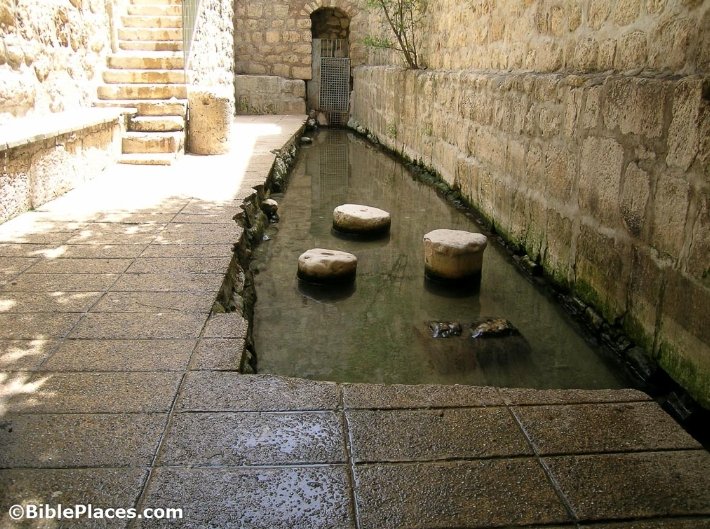
This is where Jesus healed a blind man in the book of John, Chapter 4.
He died for the very reasons He said He would — as a sacrifice for sin. His apostles were eyewitnesses of these events. After the resurrection, they went from being fearful and hiding to boldly preaching that Jesus had risen from the dead. Most of them were eventually martyred for their faith. They were beaten, imprisoned, and killed because they refused to stop proclaiming what they had seen. People do not willingly suffer and die for something they know to be a lie. Liars make poor martyrs. The fact that these men — many of whom were simple fishermen and tax collectors — were willing to give their lives rather than deny the resurrection is powerful evidence that they were convinced of the truth of what they had witnessed.
When you hold the Holy Bible in your hands, you are holding tangible evidence that God has been actively present and at work in the story of humanity since the very beginning.