A Table Before My Enemies
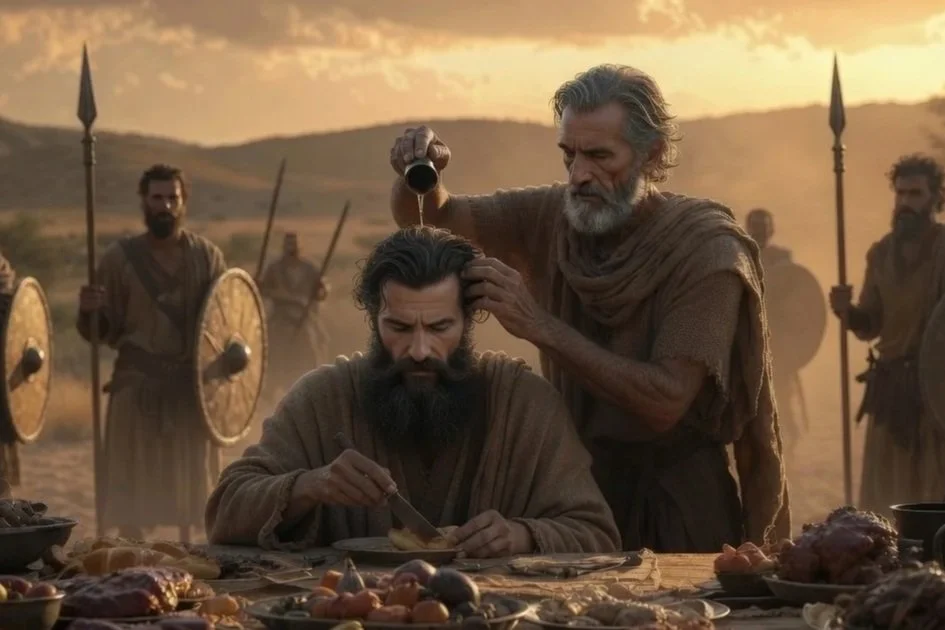
PSALM 23:5
“You prepare a table before me in the presence of my enemies.
You anoint my head with oil; my cup overflows.”
Psalm 23 is one of the most beloved passages in all of Scripture. While every psalm carries its own beauty and power, this chapter holds a special place in the hearts of believers around the world. One verse that has brought comfort to countless Christians facing opposition is Psalm 23:5:
“You prepare a table before me in the presence of my enemies.
You anoint my head with oil; my cup overflows.”
This verse often brings encouragement to those who face mockery, ridicule, or hostility because of their faith. Many believers have noticed a consistent pattern: those who oppose God’s people frequently lack the peace and blessing that come from walking with the Lord. It is important to remember, however, that not everyone who claims to belong to God is truly His child. Jesus made this clear in two powerful ways. He said, “For whoever does the will of my Father in heaven is my brother and sister and mother” (Matthew 12:50). He also confronted the religious leaders who claimed God as their Father, declaring, “You belong to your father, the devil, and you want to carry out your father’s desires” (John 8:44). Only those who do the will of my Father have the right to become children of God (John 1:12). This shows that God Himself clearly recognizes who is truly His child and who is not. Scripture reminds us that vengeance belongs to the Lord (Romans 12:19). While God is loving and patient, He is not indifferent to the suffering of His children. He actively defends, provides for, and honors those who belong to Him.
First, we must understand that our God faithfully takes care of His own. He does not treat everyone as His children, because not all of His creation are His children. In Scripture, those who oppose God and reject Him are often referred to as “those who dwell on the earth” — or earth dwellers. While it is God’s desire that every person would come to faith in Him — calling out to Him in their doubt, fear, insecurities, and distrust rather than mocking, slandering, or allowing the flesh to take control — the Bible is clear that this will not happen for everyone. As Scripture says, “The Lord is not slow in keeping his promise, as some understand slowness. Instead he is patient with you, not wanting anyone to perish, but everyone to come to repentance” (2 Peter 3:9). Yet Jesus Himself warned that the path to life is narrow, and only a few find it (Matthew 7:14). Those who do walk this path will face hardships, opposition, and in some cases even death for their faith.
This is why books like the Psalms, chapters such as Psalm 23, and verses like Psalm 23:5 offer such strong encouragement. To fully appreciate the depth of Psalm 23:5, we must understand the cultural setting in which David wrote. Around 1000 B.C. in the Ancient Near East, hospitality was considered a sacred social and moral obligation. When a host welcomed a guest into their home or court, that guest immediately came under the host’s complete protection. This bond was binding: the host was responsible to provide food, shelter, and safety, while the guest was expected to show respect. To harm a guest under these circumstances was viewed as a serious offense against both the host and the wider community, for hospitality reflected a person’s honor and standing.
In this cultural context, hosting an elaborate feast or “setting a table” for a guest carried even greater weight when done in the presence of enemies or rivals. A king, tribal leader, or person of high status would publicly prepare a banquet for an honored guest, often following a battle or during times of political tension. The enemies could witness the event, yet they were powerless to interfere—any attack on the guest would have been seen as an attack on the host’s own authority and honor. Such public acts of hospitality served as a powerful demonstration of favor, protection, and victory.
Hosting was about reputation, power, and moral duty. In royal courts and among tribal leaders throughout Israel and the surrounding nations, these banquets were far more than meals. They were deliberate displays of status and the strengthening of alliances. The imagery in Psalm 23:5 draws directly from this well-established custom, portraying God as the ultimate Host who publicly provides for and protects His people even while opposition remains.
The second part of the verse, “You anoint my head with oil,” is equally rich in meaning. In the life of a shepherd, oil was commonly used at the end of the day to soothe bruises, heal wounds, and protect sheep from insect bites. This simple act brought comfort and relief. In the context of hospitality, anointing a guest’s head with oil was a sign of honor, welcome, and special favor. Together, these images reveal that God not only protects and provides for His people—He also brings healing and joy. The anointing with oil symbolizes that those who belong to the Lord lack nothing, not even refreshment and gladness, even in the face of opposition.
This verse reveals far more than simple encouragement. It shows us that the Lord is not passive when His children face opposition. He is actively involved as Provider, Comforter, and Defender. The same God who leads us beside still waters and walks with us through the valley of the shadow of death also publicly sets a table of honor in the sight of our enemies. He anoints us with oil and causes our cup to overflow—not in secret, but openly, so that others may see His favor.
Imagine the Lord Himself preparing a table in front of those who have mocked or opposed you. Picture Him arranging the meal, pouring the drinks, and placing a seat of honor at the center. Then imagine Him personally leading you to that seat, welcoming you as His own, while those who have spoken against you watch in silence. In that moment, the Creator of the universe publicly declares His love and protection over you.
This is the powerful truth contained in Psalm 23:5—a truth that reminds every child of God that the Father not only saves us for ETERNITY but also defends and honors us in the present, here on the Earth.