What Does It Really Mean to Fear God?
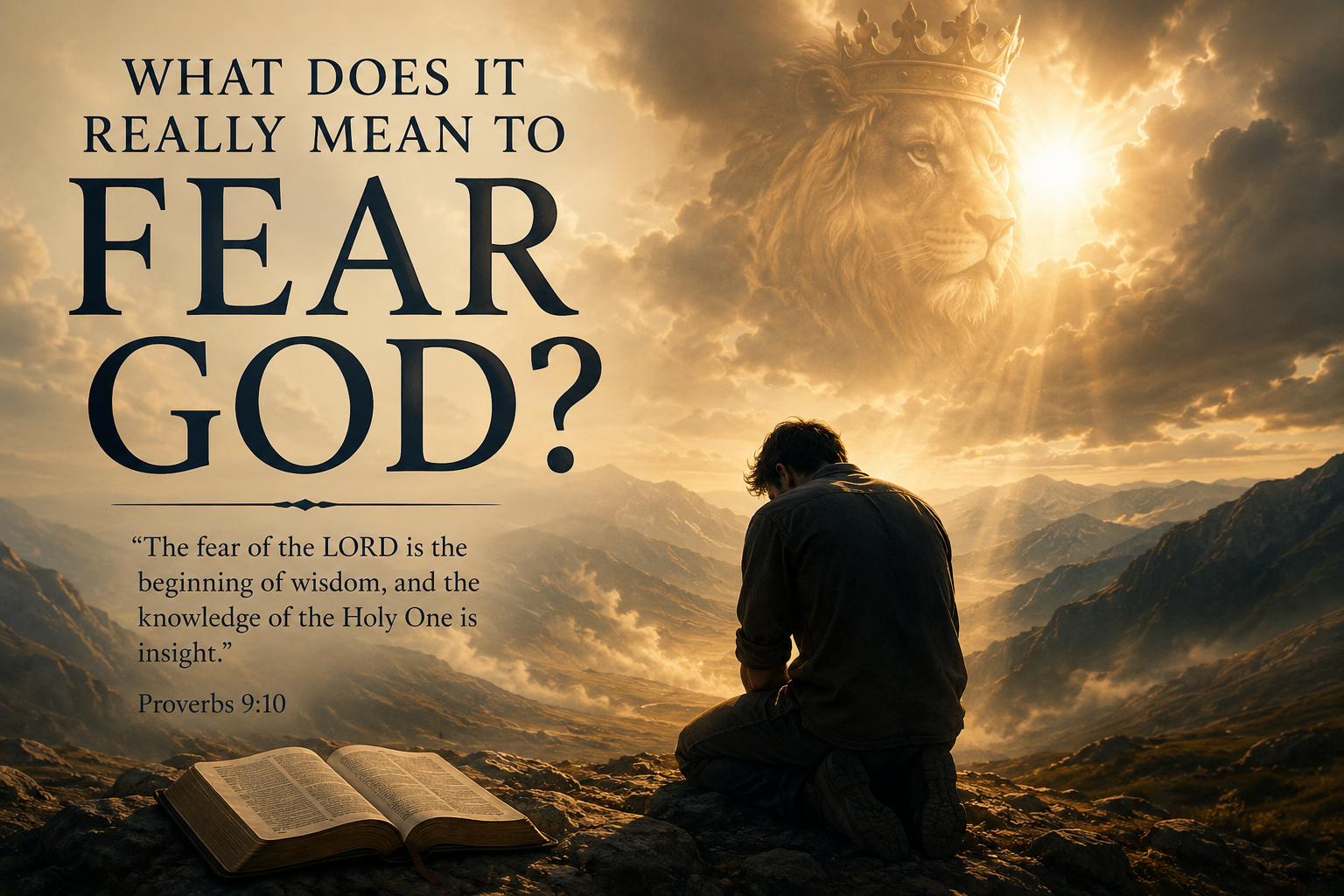
One of the most common statements you'll hear in Christian circles is, "The fear of the Lord doesn't actually mean fear—it just means respect." While there is certainly an element of respect in fearing God, is that really the whole story? More importantly, is that what the Bible teaches?
Rather than relying on popular sayings or personal opinions, let's allow Scripture to answer the question. If the Bible is our authority, then the Bible should define what it means to fear God.
From Genesis to Revelation, the fear of the Lord is presented as a virtue, not a weakness. It is never described as something believers outgrow as they mature in their faith. Instead, it is the beginning of wisdom, the foundation of obedience, and the natural response to God's holiness. Yet at the same time, Christians are also told that God loves them, has adopted them as His children, and has removed their condemnation through Jesus Christ. These truths are not in conflict. In fact, they complement one another.
The book of Proverbs begins with a statement that sets the tone for the entire discussion: "The fear of the LORD is the beginning of knowledge; fools despise wisdom and instruction" (Proverbs 1:7, ESV). Later, Proverbs repeats the same truth: "The fear of the LORD is the beginning of wisdom" (Proverbs 9:10, ESV). Wisdom does not begin with intelligence or education. It begins with a right view of God. Before we can understand ourselves or the world around us, we must understand who God is. The fear of the Lord is the starting point because it places Him in His rightful position—as the holy, sovereign Creator to whom every person is accountable.
Throughout Scripture, those who encountered God's holiness were overwhelmed by His majesty. When Isaiah saw the Lord seated upon His throne, he did not casually admire the scene. Instead, he cried, "Woe is me! For I am lost; for I am a man of unclean lips" (Isaiah 6:5, ESV). Isaiah was already God's prophet, yet standing before God's holiness exposed his own sinfulness. His response was not merely respect. It was reverent fear born from seeing God as He truly is.
The same pattern appears throughout the Bible. Moses removed his sandals before the burning bush because the ground was holy (Exodus 3:5). At Mount Sinai, the people trembled as God's presence descended upon the mountain with thunder, lightning, smoke, and the sound of a trumpet (Exodus 19:16–19). Daniel lost all his strength when he received a heavenly vision (Daniel 10:8–9). The apostle John, the disciple whom Jesus loved, fell at Christ's feet "as though dead" when he saw the glorified Lord in Revelation 1:17.
These were not unbelievers shrinking from a distant God. They were faithful servants encountering the overwhelming holiness of the One they loved. The closer they came to God, the greater their reverence became.
Some people assume that this kind of fear belonged only to the Old Testament and that Jesus replaced it with a message of love. Yet Jesus Himself taught the fear of God. In Luke 12:4–5, He told His disciples, "Do not fear those who kill the body, and after that have nothing more that they can do. But I will warn you whom to fear: fear him who, after he has killed, has authority to cast into hell. Yes, I tell you, fear him!"
Notice that Jesus did not say we should stop fearing God. Instead, He corrected misplaced fear. Human beings can harm the body, but only God has ultimate authority over eternal judgment. Christ's point is that our greatest concern should never be what people think or what people can do to us. Our greatest concern should be living before the God who rules over all things.
This truth becomes incredibly practical. When we fear God rightly, we begin fearing people less. The approval of others loses its grip because God's approval matters more. Courage grows where the fear of God replaces the fear of man.
The New Testament continues this theme after Christ's resurrection. In Acts 5, Ananias and Sapphira lied to the Holy Spirit and were judged by God. Luke records that "great fear came upon the whole church" (Acts 5:11, ESV). That fear was not unhealthy panic. It reminded believers that the God who had saved them was still holy and would not treat sin lightly.
Peter writes to Christians, "If you call on him as Father who judges impartially according to each one's deeds, conduct yourselves with fear throughout the time of your exile" (1 Peter 1:17, ESV). Notice the beautiful balance. Peter calls God "Father," emphasizing our relationship with Him through Christ, yet in the very same sentence commands believers to live in fear. God's fatherly love does not erase His holiness; it allows us to approach Him without losing sight of who He is.
Paul echoes this balance when he tells believers to "work out your own salvation with fear and trembling" (Philippians 2:12, ESV). He is not teaching that salvation is earned by works. The very next verse explains that "it is God who works in you, both to will and to work for his good pleasure" (Philippians 2:13, ESV). Rather, Paul is calling believers to pursue obedience with humility, seriousness, and reverence because they serve the living God.
At this point, someone may ask about 1 John 4:18: "There is no fear in love, but perfect love casts out fear." Doesn't this verse teach that Christians should no longer fear God?
The context answers that question. John immediately explains that the fear being cast out is fear that "has to do with punishment." He is speaking about the terror of final condemnation. Those who have trusted in Jesus Christ no longer need to dread God's judgment because Christ bore that judgment on the cross. Romans 8:1 declares, "There is therefore now no condemnation for those who are in Christ Jesus" (ESV).
John is not contradicting Jesus, Peter, Paul, Solomon, or the rest of Scripture. He is addressing a different kind of fear. The believer no longer lives in terror of eternal punishment, but that does not eliminate reverence, awe, humility, or the recognition of God's holiness. In fact, understanding the greatness of God's grace should deepen our worship. We stand before the same holy God Isaiah saw, yet we are welcomed into His presence because of Christ.
So what does it really mean to fear God?
It means recognizing Him for who He truly is. It is reverence, awe, humility, obedience, and a healthy awareness of His holiness and justice. It is not cowering from an unpredictable tyrant, nor is it reducing God to a friendly companion who makes no demands of us. Biblical fear is the response of a heart that knows God is infinitely holy, infinitely just, infinitely powerful, and yet infinitely merciful toward those who trust in His Son.
This kind of fear transforms the Christian life. A believer who fears God hates sin because sin offends the One he loves. He worships with sincerity because he knows he stands before the King of kings. He obeys Scripture not merely out of duty but because he understands God's authority. He forgives others because he remembers the mercy he has received. He shares the gospel because eternity is real and Christ is the only Savior.
Ultimately, the fear of the Lord is not the enemy of love. It is one of the deepest expressions of it. The more we understand God's holiness, the more we stand in awe of Him. The more we understand the cross, the more we marvel that this holy God would send His own Son to save undeserving sinners.
The Bible never asks us to choose between fearing God and loving Him. It calls us to do both. We fear Him because He is holy. We love Him because He first loved us. And through Jesus Christ, we can approach the very God who inspires reverent fear with confidence, gratitude, and joy. The fear of the Lord is not merely respect—it is the humble response of a heart that has finally begun to see God as He truly is.