When Scripture Is Twisted: Seven Biblical Texts the Culture Has Rewritten
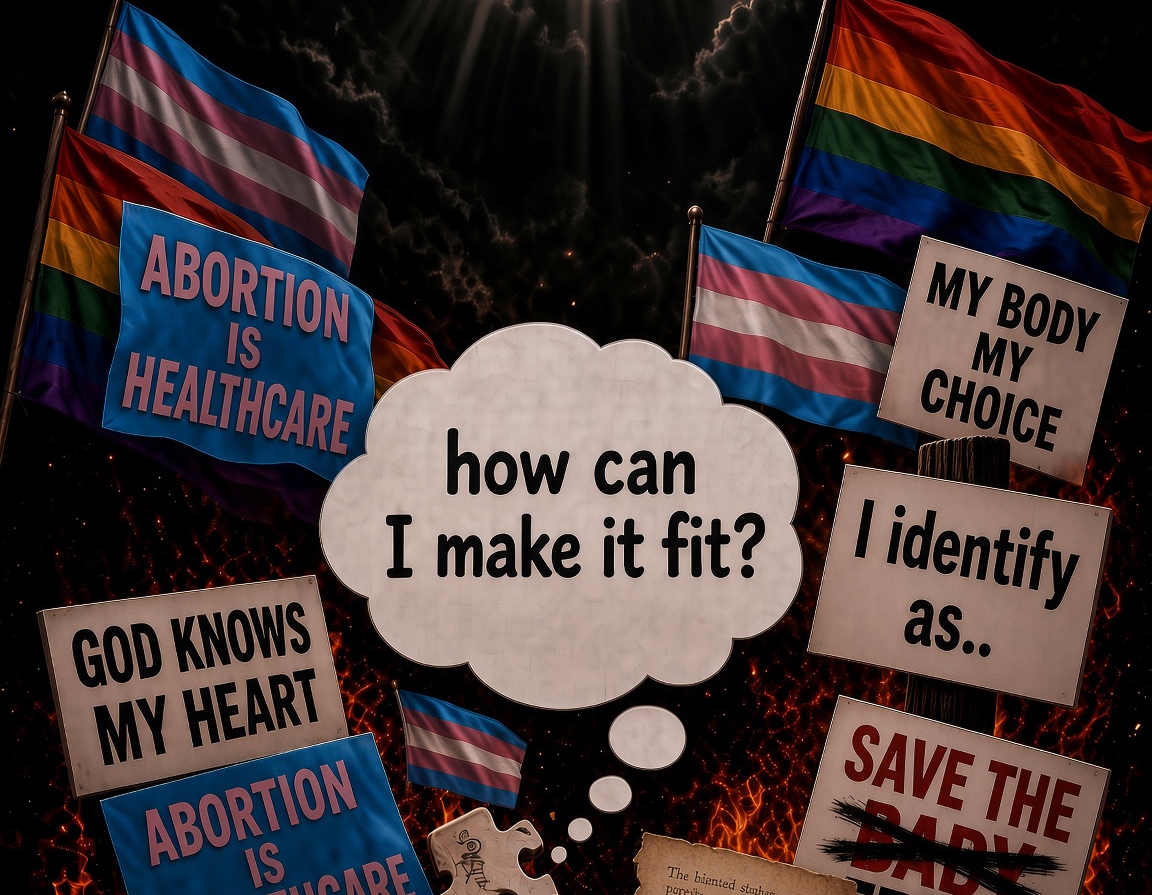
It is always fascinating to watch the world scramble to force the Bible into alignment with a worldview that the Bible itself refuses to affirm. For a society that has increasingly mocked God, rejected His authority, questioned His design, and attempted to redefine the boundaries He established in creation, the irony is difficult to miss: many who claim that God does not exist nevertheless spend an extraordinary amount of time explaining what God supposedly meant.
The problem is not merely that people disagree with Scripture. Christians have never been promised that the world would agree with the Word of God. The problem is something more deliberate and more serious: taking a biblical text out of its literary, historical, grammatical, and theological context and then making it say something the biblical author never intended to communicate. That is not interpretation. It is manipulation.
Scripture itself repeatedly warns against this. Deuteronomy 4:2 commands Israel neither to add to God's Word nor take away from it. Proverbs 30:5–6 declares that every word of God proves true and warns against adding to His words. Peter describes people who twist the Scriptures “to their own destruction” (2 Peter 3:16). Jeremiah 23:36 speaks with particular severity about those who have “perverted the words of the living God.” And Revelation 22:18–19 closes the canon with a solemn warning concerning the consequences of adding to or taking away from God's revealed Word.
That warning should sober anyone who handles Scripture—Christian or otherwise. The Bible is not raw material for our political agendas, sexual identities, cultural preferences, or personal philosophies. We do not approach the text as editors who are free to revise God's revelation until it agrees with us. We approach it as creatures standing before our Creator.
Obviously, we cannot address every distorted biblical argument in one article. There may need to be a Part 1, Part 2, Part 3, and perhaps Part 10, because the world has had centuries to manufacture arguments against the Word of God. But something is encouraging about that. If the world is willing to spend enormous amounts of energy attempting to discredit Scripture, then Christians should be willing to spend even more energy learning it, understanding it, defending it, and actually living according to it.
So let us examine seven passages that are repeatedly removed from their context and recruited to defend conclusions that the passages themselves do not teach.
1. “Lazarus, Come Out!” — When Resurrection Is Turned Into Affirmation
John 11:43 records one of the most extraordinary commands in the ministry of Jesus: “Lazarus, come out.” Lazarus had been dead for four days. His body had already been placed in a tomb, and Martha herself acknowledged the physical reality of death when she warned Jesus that there would be an odor because he had been dead for four days (John 11:39). Jesus therefore stood before a genuine grave containing a genuinely dead man and commanded him to come forth.
Lazarus obeyed.
The point of the passage is not difficult to identify. Jesus is demonstrating His authority over death. John deliberately places this sign within the larger theological purpose of his Gospel: Jesus is “the resurrection and the life” (John 11:25). The raising of Lazarus points beyond Lazarus himself toward the identity of Christ and ultimately toward His own resurrection. The command “Come out” is therefore not a vague metaphor for self-expression. It is a divine command issued to a dead man, demonstrating that Christ possesses authority over the grave itself.
Yet this passage has been repurposed in some modern religious rhetoric as though Jesus were saying, “Come out of the closet. Stop hiding who you are. Live openly according to your sexual desires.” That interpretation has no exegetical foundation whatsoever. Lazarus was not being instructed to disclose a hidden sexual identity. He was being summoned from literal death to literal life. To transform Christ's command to a corpse into a modern affirmation slogan is not contextual interpretation; it is anachronism.
There is, however, a legitimate spiritual application of the passage—but it is almost the exact opposite of the modern reinterpretation. Scripture repeatedly describes humanity apart from Christ as spiritually dead in sin (Ephesians 2:1–5). The gospel is therefore a summons from death to life. Christ calls sinners out of darkness, not so that they may preserve whatever identity or desire previously ruled them, but so that they may become new creations in Him. The Christian message is not “bring your desires to Jesus and demand that He affirm them.” It is “come to Jesus, die to yourself, and receive the new life He alone can give.”
That is the pattern throughout the New Testament. Jesus calls people to repentance and faith. Paul commands believers to put to death what belongs to the earthly nature (Colossians 3:5), to crucify the flesh with its passions and desires (Galatians 5:24), and to walk in newness of life (Romans 6:4). Christ does not merely rescue people from the consequences of sin while leaving the dominion of sin untouched. He calls them out of death and into life.
2. “Judge Not” — When Jesus' Warning Against Hypocrisy Becomes a Prohibition Against Discernment
“Judge not, that you be not judged” (Matthew 7:1) has become one of the most frequently quoted sentences in modern culture. It is often presented as though Jesus issued a universal prohibition against identifying sin, confronting false teaching, distinguishing truth from error, or making any moral judgment whatsoever.
But that interpretation collapses under the immediate context.
Jesus continues by discussing the person who sees the speck in his brother's eye while failing to recognize the log in his own. His solution is not, “Therefore, never remove the speck.” His solution is, “First take the log out of your own eye, and then you will see clearly to take the speck out of your brother's eye” (Matthew 7:5). Notice the sequence. Self-examination comes first; discernment follows. Jesus condemns hypocritical judgment, not righteous discernment.
The rest of Scripture confirms this distinction. Jesus Himself commanded, “Do not judge by appearances, but judge with right judgment” (John 7:24). Paul instructed the Corinthians to exercise judgment within the church concerning serious moral sin (1 Corinthians 5). Believers are commanded to test teachings, distinguish spirits, expose darkness, correct those who wander from truth, and restore those caught in sin with gentleness (1 John 4:1; Ephesians 5:11; Galatians 6:1; James 5:19–20). A Christianity that is forbidden from making moral distinctions would be incapable of obeying any of these commands.
The biblical issue, therefore, is not whether Christians may recognize sin. The issue is how they do so. Christians are not called to pronounce themselves sovereign judges who possess God's throne. Final judgment belongs to God. Christians are called instead to proclaim what God has already revealed, examine themselves honestly, and warn others of the consequences of rebellion against Him.
That distinction matters. If someone is destroying his marriage through adultery, Scripture does not command Christians to remain silent because “only God can judge.” If someone is abusing his wife, the biblical response is not moral neutrality. If someone is enslaved to drunkenness, greed, hatred, sexual immorality, or bitterness, Christians do not demonstrate love by pretending those things are harmless. Love tells the truth. But it tells the truth humbly, remembering that the person speaking is also a sinner who stands in need of grace.
The Christian therefore does not say, “I am better than you.” The Christian says, “God has spoken, and His Word applies to both of us. Let us repent.” That is the difference between self-righteous condemnation and righteous judgment.
3. “Neither Do I Condemn You” — When Mercy Is Separated From Repentance
John 8:11 is another passage frequently isolated from its context: “Neither do I condemn you; go, and from now on sin no more.”
The remarkable thing is that the statement itself contains both mercy and moral command. Jesus does not condemn the woman in the manner her accusers intended, but neither does He declare her behavior morally acceptable. He releases her from condemnation and immediately commands her to leave her sinful way of life.
That distinction is essential because modern arguments often want one half of the sentence without the other. “Neither do I condemn you” is emphasized, while “go, and from now on sin no more” disappears. But Jesus did not separate forgiveness from repentance. His mercy was not permission to continue in sin.
The broader New Testament message is consistent. Jesus announces the kingdom with the command, “Repent and believe in the gospel” (Mark 1:15). Paul tells believers that God's kindness is intended to lead people to repentance (Romans 2:4). Titus 2:11–12 teaches that the grace of God trains us to renounce ungodliness and worldly passions. Grace does not merely excuse sin; grace teaches us to reject it.
This is why the Christian doctrine of forgiveness cannot be reduced to emotional reassurance. Biblical forgiveness is profoundly gracious, but it is not morally indifferent. God does not forgive by declaring that evil was never evil. At the cross, sin is dealt with precisely because sin matters. Christ bears the judgment sinners deserve so that those who trust in Him may be reconciled to God.
Jesus therefore offers something far greater than affirmation. He offers freedom.
The woman in John 8 was not told to return to the same behavior under a new theological vocabulary. She was told to go and sin no more. That is the pattern of the gospel: mercy for the sinner, truth about the sin, and a call to walk in newness of life.
4. “God Is Love” — When Divine Love Is Redefined as Affirmation
“God is love” (1 John 4:8, 16) is one of the most beautiful declarations in Scripture. It is also one of the most frequently emptied of its biblical meaning.
The modern argument often proceeds like this: God is love; therefore God would never disapprove of something a person sincerely desires; therefore Christians must affirm every expression of identity, sexuality, or behavior in the name of love. But the conclusion does not follow from the premise. It depends upon redefining love before the argument even begins.
The Bible defines God's love, rather than allowing human beings to define it for Him. Romans 5:8 says that God demonstrates His love in Christ's death for sinners. That is the biblical model of divine love: holy love pursuing guilty people at enormous cost. God's love does not require Him to call sin good. In fact, the cross demonstrates the opposite. Sin is so serious that the Son of God willingly gave Himself to redeem those enslaved by it.
First Corinthians 13 likewise refuses to separate love from truth. Love is patient and kind; it is not arrogant or self-seeking; and it “does not rejoice at wrongdoing, but rejoices with the truth” (1 Corinthians 13:6). Biblical love therefore cannot be defined as unconditional approval of whatever another person wants to do. Sometimes genuine love requires confrontation, correction, warning, discipline, and even painful truth.
God's forgiveness likewise flows from His character. Isaiah 43:25 declares that God blots out transgressions for His own sake. Forgiveness is not something sinners manipulate God into providing by appealing to sincerity. Nor is forgiveness evidence that the offense was imaginary. It is evidence of divine mercy.
God is love. But because God is love, He does not abandon people to the things that destroy them. The God who says “Come to me” also says “Repent.” The God who forgives also sanctifies. The God who welcomes sinners also commands them to leave their sin behind.
The question, therefore, is not whether God loves sinners. Scripture answers that unequivocally. The question is whether we are willing to allow God Himself to define what His love looks like.
5. “There Is Neither Male Nor Female” — When Equality in Christ Is Turned Into the Erasure of Creation
Galatians 3:28 declares: “There is neither Jew nor Greek, there is neither slave nor free, there is no male and female, for you are all one in Christ Jesus.”
This passage is sometimes presented as though Paul were teaching that the distinctions between male and female no longer have any theological or practical significance. But that interpretation ignores the argument Paul is actually making.
Galatians 3 is fundamentally concerned with justification, faith, the promise given to Abraham, and membership among God's people. Paul is confronting the claim that Gentiles must adopt Jewish boundary markers to receive the full status of God's covenant people. His answer is that those who belong to Christ are Abraham's offspring and heirs according to promise (Galatians 3:29). Ethnicity, social status, and sex do not determine whether someone receives salvation in Christ.
That is radically important. A Jewish man does not receive a superior salvation. A free person does not receive a superior salvation. A man does not receive a superior salvation. A Gentile woman, a slave, and a Jewish man all come to God through the same Christ and are justified by the same faith. The ground beneath the cross is level.
But equality of standing before God is not identical to the elimination of every distinction God created.
Paul himself continued to speak about men and women as men and women after writing Galatians 3:28. He discussed marriage, husbands and wives, fathers and mothers, men and women in the church, and distinctions in conduct and responsibility (Ephesians 5:22–33; 1 Timothy 2:8–15; 1 Timothy 5:1–2). Therefore, whatever Galatians 3:28 means, it cannot mean that biological sex has ceased to exist or that every distinction between male and female has disappeared.
The creation account establishes the category long before the law of Moses or the New Testament church. Genesis 1:27 states that God created humanity “male and female.” Jesus Himself appealed to this creation order when discussing marriage in Matthew 19:4–6. The biblical doctrine begins with God's creative act, not with modern cultural categories.
Galatians 3:28 therefore demolishes human hierarchy without demolishing God's creation. It declares that no ethnicity, social rank, or sex gives one person greater access to salvation than another. Every believer stands equally dependent upon the grace of Christ. That is not an attack on the created order. It is the glory of the gospel.
6. “God Knows My Heart” — When God's Knowledge Becomes an Excuse
“God knows my heart” is certainly true. The problem is what people frequently mean by it.
The statement is sometimes used as though God's knowledge of our motives automatically validates our choices: “God knows my heart, so He knows I mean well.” But Scripture never teaches that sincerity transforms an objectively sinful action into righteousness.
In fact, Scripture repeatedly warns us about the unreliability of the human heart. Jeremiah 17:9 says, “The heart is deceitful above all things, and desperately sick.” Jesus teaches that evil thoughts and sinful actions proceed from within the human heart (Matthew 15:18–19). Proverbs 14:12 warns that a way can appear right to a person while ultimately leading to death.
The biblical answer to our unreliable hearts is not to worship them. It is to submit them to God.
Proverbs 3:5–6 commands us to trust in the Lord rather than lean upon our own understanding. Ezekiel 36:26 speaks of God giving His people a new heart. Romans 12:2 commands believers to be transformed through the renewal of their minds. Scripture therefore does not tell us to discover what our heart already wants and then baptize that desire as God's will. It tells us to allow God to transform our desires according to His truth.
“God knows my heart” should therefore produce humility, not self-justification. God knows the motives we hide from everyone else—including the motives we hide from ourselves. He sees our sincerity, but He also sees our self-deception.
Good intentions matter, but they do not become a substitute for obedience. Saul could claim good intentions in 1 Samuel 15, yet Samuel responded that obedience is better than sacrifice. Uzzah could reach out with what may have appeared to be a protective intention in 2 Samuel 6, yet God's holiness could not simply be rewritten according to human reasoning.
The Christian life therefore cannot be summarized as “follow your heart.” The biblical command is closer to this: follow Christ, trust His Word, renew your mind, and allow Him to transform your heart. God does indeed know your heart. That should make us cautious about trusting it—not confident that everything within it deserves to be obeyed.
7. “My Body, My Choice” — When Human Autonomy Is Placed Above the Creator
The phrase “My body, my choice” assumes a philosophical principle that Scripture does not grant: absolute personal sovereignty over the body. It is also ironic that Jesus says, “I must die, so you can live,” and we turn that around, “You must die, so I can live.” Such a shame….
Christianity begins somewhere else. The human body is not ultimately self-owned. Scripture teaches that human beings are creatures made by God, sustained by God, accountable to God, and—where believers are concerned—redeemed by Christ. Paul asks the Corinthians, “Do you not know that your body is a temple of the Holy Spirit within you?” and concludes, “You are not your own, for you were bought with a price” (1 Corinthians 6:19–20).
That principle becomes particularly significant when discussing the unborn. Scripture repeatedly portrays God as knowing and forming human beings before birth. Psalm 139:13–16 speaks of God knitting a person together in the womb. Jeremiah 1:5 records God saying, “Before I formed you in the womb I knew you.” John the Baptist responds to the presence of Christ while still in the womb (Luke 1:41–44). These passages do not treat the womb as a morally empty space occupied by nonpersons whose value begins only at birth.
Numbers 5:11–31 is sometimes presented as a biblical abortion ritual, but that interpretation fails to account for the actual text and its ancient setting. The passage describes an ordeal of jealousy in which a woman accused of adultery undergoes a divinely regulated test in the absence of witnesses. The text does not establish elective abortion as a permitted practice, nor does it instruct women to terminate unwanted pregnancies. Its purpose is the judicial exposure of suspected adultery through an ordeal placed under God's authority.
Exodus 21:22–25 is likewise frequently invoked as though it establishes that the unborn possess little or no moral value. But the passage concerns men fighting and accidentally injuring a pregnant woman. The Hebrew terminology and the broader legal context have generated substantial scholarly debate concerning whether the passage describes premature birth or miscarriage. What it certainly does not do is provide a biblical authorization for intentional abortion. The text addresses accidental harm and establishes legal consequences; it does not establish a right of elective termination.
The larger biblical witness must therefore be considered. Scripture consistently condemns the shedding of innocent blood, repeatedly emphasizes God's knowledge of human beings before birth, and presents children as gifts from God rather than disposable possessions. The Christian argument against abortion does not rest upon one isolated verse. It rests upon a comprehensive biblical theology of creation, human dignity, innocent life, God's sovereignty, and the prohibition against shedding innocent blood.
“My body, my choice” therefore encounters the fundamental Christian confession: your body is not your ultimate authority, and neither is mine. God is. Human autonomy is not the highest good. Faithfulness to the Creator is.
The Problem Is Not That Scripture Is Unclear.
At the end of all of this, the central issue is not that the Bible has somehow failed to communicate clearly enough. The recurring problem is that people approach Scripture wanting it to bless conclusions they have already reached. The method changes, but the strategy remains remarkably consistent. A verse is isolated from its paragraph. The paragraph is separated from the book. The book is separated from the rest of Scripture. A modern concept is then imported into the ancient text, and the resulting interpretation is presented as though it were the original meaning.
That is not how Christians are supposed to handle the Word of God. We are commanded to rightly handle the word of truth (2 Timothy 2:15), to test everything and hold fast to what is good (1 Thessalonians 5:21), to contend for the faith once delivered to the saints (Jude 3), and to love God with our minds as well as our hearts (Matthew 22:37).
Biblical apologetics therefore requires more than simply saying, “The Bible says it.” We must be able to demonstrate where the Bible says it, what the biblical author meant, how the immediate context supports that meaning, and how the interpretation fits within the whole counsel of Scripture. That is especially important in an age when people will quote Scripture in defense of almost anything.
When someone twists Scripture to justify sexual immorality, the answer is not merely anger. Open the text. Examine the passage. Read the surrounding verses. Understand the historical and literary context. When someone invokes “Judge not” to silence every warning about sin, open the context. When someone quotes “God is love” while redefining love according to contemporary morality, open the whole counsel of Scripture. When someone invokes Galatians 3:28 to erase the distinction between male and female, return to Genesis and read Galatians in its proper context. When someone says, “God knows my heart,” remind them that Scripture also knows the human heart—and Scripture does not flatter it. When someone says, “My body, my choice,” remember that Christianity begins not with autonomous self-ownership but with creation: God made us.
And if someone insists that Scripture must be changed before they can accept it, the Christian response should be neither embarrassment nor compromise. We do not need to apologize for what God has revealed, nor do we need to reshape His Word so that it becomes acceptable to a culture that has already rejected His authority. The Word of God does not need to be rescued from modern culture. Modern culture needs to be confronted by the Word of God.
We do not stand over Scripture as its judges. We stand beneath it as those who will one day be judged by the God who gave it. Scripture is not our servant, our political weapon, or our theological clay that we reshape according to the demands of the moment.
So let us stop bending the Bible until it agrees with us. Let us stop turning Christ's words into slogans He never spoke. Let us stop making Scripture serve ideologies that Scripture itself condemns. Instead, let us do something much harder—and much more faithful: let the Word of God correct us.