Imagine standing before an ancient Egyptian monument commissioned by a pharaoh who believed he had defeated Israel. Now imagine examining a Babylonian government record documenting the capture of Jerusalem, followed by another tablet recording provisions issued to the very king the Bible says was taken prisoner.
These documents were not written to defend the Bible. Their authors worshipped different gods, ruled foreign nations, and often considered Israel an enemy. Nevertheless, their records preserve historical details that correspond remarkably with Scripture.
What makes these discoveries especially compelling is their independence. They were not written by Israel's prophets, preserved by Christian churches, or created to convince future generations that the Bible was true. They were ordinary records of rulers, wars, government policies, and religious communities.
And centuries later, they allow us to examine biblical history through the words of the ancient world itself.
1. Egypt's Pharaoh Acknowledges Israel
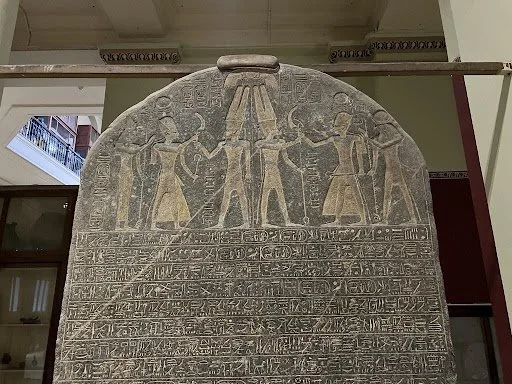
In 1896, archaeologist Flinders Petrie discovered a large granite monument belonging to Pharaoh Merneptah, who ruled Egypt during the thirteenth century BC.
The monument, known as the Merneptah Stele, celebrates Egyptian military victories. Its inscription, dating to approximately 1208 BC, names several locations in Canaan before declaring that Israel had been devastated.
This is extraordinary because it contains the earliest widely accepted reference to Israel outside the Bible.
Even more significant is how the inscription identifies Israel. Egyptian hieroglyphs distinguish between territories, cities, and groups of people. In this inscription, Israel is designated as a people rather than an established city-state.
That means an Egyptian ruler recognized a population called Israel living in or near Canaan by the late thirteenth century BC.
The objection: Does this prove the Exodus happened exactly as recorded?
Not by itself. The inscription does not mention Moses, the plagues, or the crossing of the Red Sea. However, it establishes an important historical fact: Israel was already an identifiable people in Canaan at a very early date.
Some critics question the chronology and details of Israel's emergence. Those remain legitimate historical discussions. But the suggestion that Israel was entirely invented by much later biblical writers must account for a contemporary Egyptian record naming that people centuries earlier.
The pharaoh intended to celebrate Israel's defeat. Instead, his inscription became enduring evidence of Israel's ancient existence.
2. Babylon Records the Capture of Jerusalem
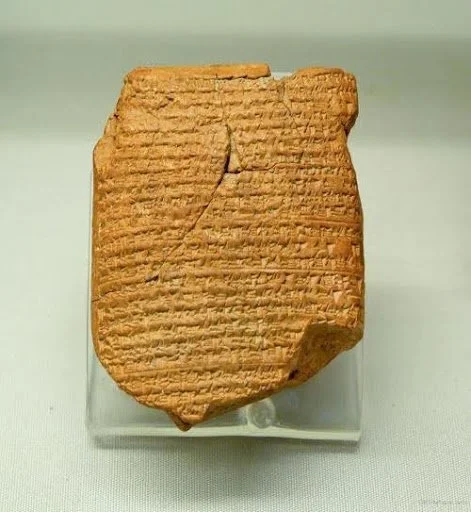
The Bible describes a devastating period when Judah fell under Babylonian domination. In 2 Kings 24:10–17, King Nebuchadnezzar besieges Jerusalem, captures King Jehoiachin, removes him from power, and appoints another ruler over Judah.
Centuries later, a Babylonian clay tablet provided an independent account of the same campaign.
Known as the Babylonian Chronicle, tablet BM 21946 records events from Nebuchadnezzar's reign. Its account of his seventh year describes the capture of Jerusalem in 597 BC, the seizure of its king, and the appointment of a replacement ruler.
Compare that with 2 Kings 24. The agreement is striking: the same invading empire, the same king of Babylon, the same city, the same captured Judean ruler, and the same political outcome.
The objection: Could the biblical writers simply have incorporated genuine historical information into an otherwise unreliable story?
Knowing historical facts does not automatically establish the reliability of every surrounding narrative. But it is unreasonable to dismiss corroborated details merely because they appear in Scripture.
This is especially powerful because the Babylonian Chronicle was not a Jewish account attempting to justify Judah's defeat. It was a Mesopotamian record documenting Babylonian military affairs.
The biblical account and the Babylonian record independently preserve the central events of Jerusalem's surrender in 597 BC.
And the story doesn't end there.
3. The Captive King Appears in Babylon's Financial Records
After King Jehoiachin was taken to Babylon, what happened to him?
The Bible tells us that he remained in exile. In 2 Kings 25:27–30, we eventually learn that a later Babylonian ruler showed him favor and provided for his daily needs.
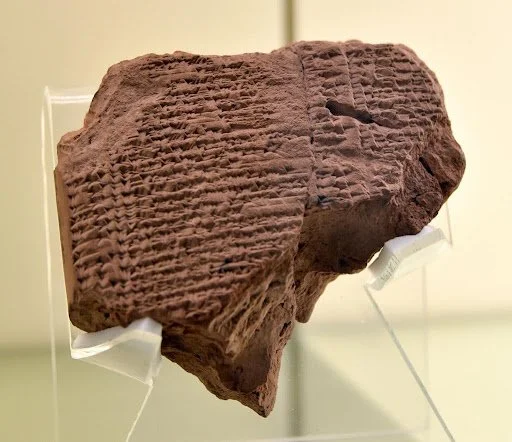
During archaeological excavations in Babylon, researchers discovered administrative tablets recording supplies distributed to individuals associated with the royal court.
Among those listed was a man identified as Yaukin, king of the land of Judah—a Babylonian rendering of Jehoiachin's name. Other entries identify members of his royal family.
These records date to the sixth century BC, during Nebuchadnezzar's reign. One important ration text is dated to approximately 592 BC, only a few years after Jehoiachin's deportation.
Consider how specific this evidence is.
The Bible says Judah's king was taken to Babylon. Babylonian records identify that same king living there, still recognized by his royal title, and receiving provisions.
The objection: Doesn't this simply prove that one Judean king existed?
It establishes more than his existence. It supports his presence in Babylon following the conquest, his continued royal identification, and his inclusion within the Babylonian palace administration.
The tablets do not directly document the later release described in 2 Kings 25, and they should not be presented as though they do. Yet their agreement with the earlier circumstances of his exile is exceptionally strong.
Sometimes the most persuasive historical evidence is not an impressive military monument but a government accountant recording how much oil a captive king received.
4. Cyrus the Great: A Persian Policy That Fits the Book of Ezra
The Book of Ezra begins with an extraordinary development. After decades of Babylonian domination, the Persian king Cyrus authorizes Jewish exiles to return and rebuild the temple in Jerusalem.
At first glance, such a decision might seem unusual. Why would a conquering empire permit displaced populations to return home and restore religious institutions?
The answer becomes clearer when we examine the Cyrus Cylinder.
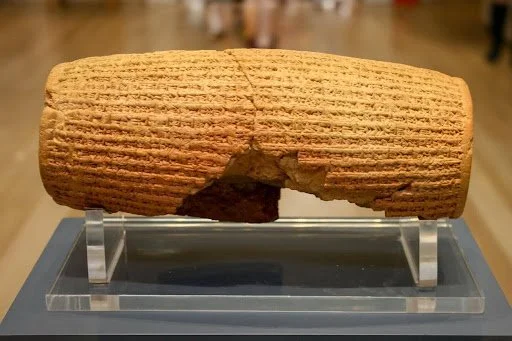
Discovered in Babylon in 1879, this clay inscription was produced after Cyrus conquered the city in 539 BC. It describes the restoration of sanctuaries and the return of displaced groups and religious objects to their appropriate locations.
Although its language praises the Babylonian god Marduk rather than the God of Israel, it reveals something important about Cyrus's approach to governing conquered territories.
His administration could strengthen imperial stability by restoring local religious institutions and supporting communities that had suffered under previous rulers.
This provides an excellent historical setting for the policy described in Ezra 1:1–4.
The objection: The Cyrus Cylinder never specifically mentions the Jews or Jerusalem.
That is correct, and claiming otherwise would misrepresent the evidence.
The cylinder is not a surviving copy of the decree recorded in Ezra. It is evidence of the broader imperial policy under which such a decree would make historical sense.
The absence of a Jewish reference on a document concerned primarily with Babylon and other regions does not contradict Ezra's account of Cyrus's treatment of Judah.
Rather than describing an implausible act of royal generosity, Ezra places the Jewish return within a political approach independently documented in Persian-period history.
5. A Jewish Community in Egypt Leaves Its Own Records
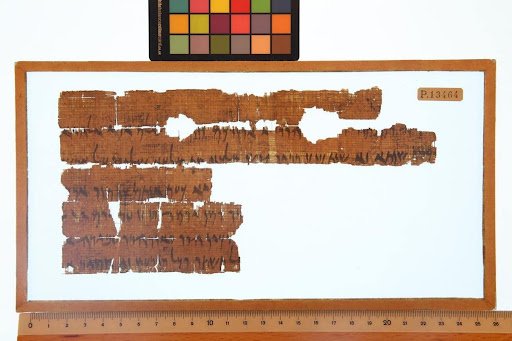
Another fascinating discovery comes from Elephantine, an island in the Nile River near modern Aswan, Egypt.
Archaeologists recovered numerous Aramaic documents belonging to a Jewish military community living there during the Persian period. These included marriage contracts, legal agreements, letters, and records concerning religious practices.
One particularly important document, dating to 419 BC, contains instructions associated with the Festival of Unleavened Bread, including restrictions on leaven and designated days of observance.
These practices closely resemble the commands found in Exodus 12 and Leviticus 23.
The surviving papyrus is damaged, and some reconstructed portions remain uncertain. Yet it provides independent evidence that a Jewish community outside Judah was observing religious customs associated with the biblical law during the fifth century BC.
The Elephantine documents also reveal complications: this community maintained its own temple and some religious practices that did not fully conform to the regulations described in the Torah.
But that actually makes the discovery more valuable historically. The documents were not fabricated to portray an idealized Jewish community. They preserve ordinary people practicing, interpreting, and sometimes departing from their inherited traditions.
The objection that Jewish religious customs were invented entirely in a much later period must account for these surviving documents.
The biblical world was not limited to Jerusalem. Jewish communities existed across the ancient Near East, preserving religious practices and corresponding with political authorities in ways consistent with the wider historical setting of Ezra and Nehemiah.
The Verdict: History Has Left Its Own Witnesses
Egypt recognized Israel as an identifiable people around 1208 BC. Babylon recorded Jerusalem's conquest in 597 BC. Royal administrative tablets identify Judah's exiled king. Persian imperial policy helps explain the return from captivity, while Jewish documents from Egypt preserve religious practices closely connected to biblical law.
These records come from different nations, centuries, languages, and administrative settings. Their authors were not working together to establish the reliability of Scripture.
No individual artifact proves every biblical event or supernatural claim. But together, these documents provide powerful independent confirmation of the historical world in which the Bible's narratives unfold.
The important question is no longer whether biblical history can be investigated outside the Bible. Clearly, it can. And numerous details survive that correspond closely with the biblical record.
For Christians, this cumulative evidence supports a conviction that runs throughout Scripture: God did not reveal Himself through imaginary kingdoms or fictional civilizations. His dealings with humanity occurred within the real history of the world.
The ancient nations left behind their own testimony. And time after time, their records corroborate the people, places, and events preserved in the Bible.